
Peptide Testing
BPC-157 + TB-500 Blend: A Research Guide to Purity, Testing and Sourcing in Canada
By PRISM Analytical Laboratories · · 8 min read
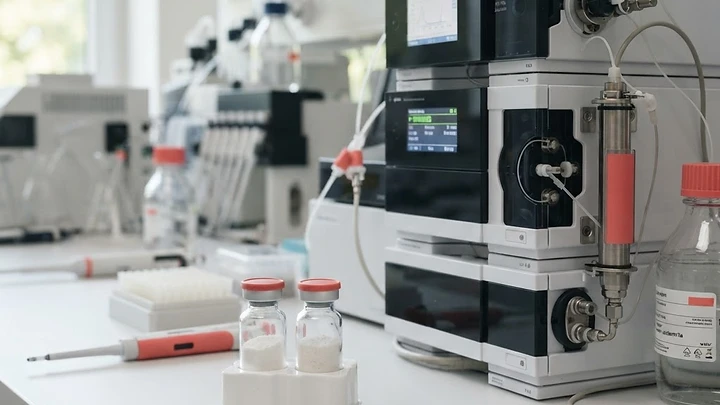
The BPC-157 + TB-500 blend is one of the most requested research peptide combinations in Canada. Researchers studying tissue repair models often pair the two because they are thought to act through complementary pathways. But a blend is only as useful as its composition is accurate, and blends are harder to manufacture and verify than single peptides.
This guide covers what each peptide is, why they are studied together, how a blend is tested in the lab, and how to source material you can trust.
All peptides discussed here are sold for laboratory research use only and are not approved for human consumption.
What is BPC-157?
BPC-157 (Body Protection Compound-157) is a synthetic 15-amino-acid peptide derived from a protein found in gastric juice. Preclinical studies have explored its role in angiogenesis, tendon and ligament models, and gut lining integrity. Its molecular weight is roughly 1,419 Da.
What is TB-500?
TB-500 is a synthetic fragment based on the active region of Thymosin Beta-4, a naturally occurring 43-amino-acid protein involved in actin regulation and cell migration. Research has focused on wound healing, flexibility of tissue and inflammation models. Commercial TB-500 is usually the short Ac-LKKTETQ fragment, though some suppliers sell full-length Thymosin Beta-4 under the same name, which is one reason testing matters.
Why study them as a blend?
Researchers combine the two because their proposed mechanisms differ:
| Property | BPC-157 | TB-500 |
|---|---|---|
| Length | 15 amino acids | 7 aa fragment (or 43 aa full TB4) |
| Approx. molecular weight | 1,419 Da | ~889 Da (fragment) / ~4,963 Da (TB4) |
| Primary research focus | Angiogenesis, gut and tendon models | Actin regulation, cell migration |
| Common vial size in blends | 5 mg or 10 mg | 5 mg or 10 mg |
A typical blend vial is labelled something like 10 mg BPC-157 / 10 mg TB-500. Each peptide must be present at its claimed amount for the research to be reproducible.
Why blends are harder to verify
With a single peptide, a lab measures one main peak. With a blend, the lab must separate and quantify two compounds in the same vial. Common problems we see include:
- Ratio drift: one peptide is under-filled, for example 10 mg BPC-157 but only 6 mg TB-500.
- Substitution: a cheaper peptide replaces one component entirely.
- Low purity: synthesis by-products and truncated sequences show up as extra peaks.
- Wrong TB-500 form: fragment sold as full Thymosin Beta-4, or vice versa.
How PRISM tests a BPC-157 + TB-500 blend
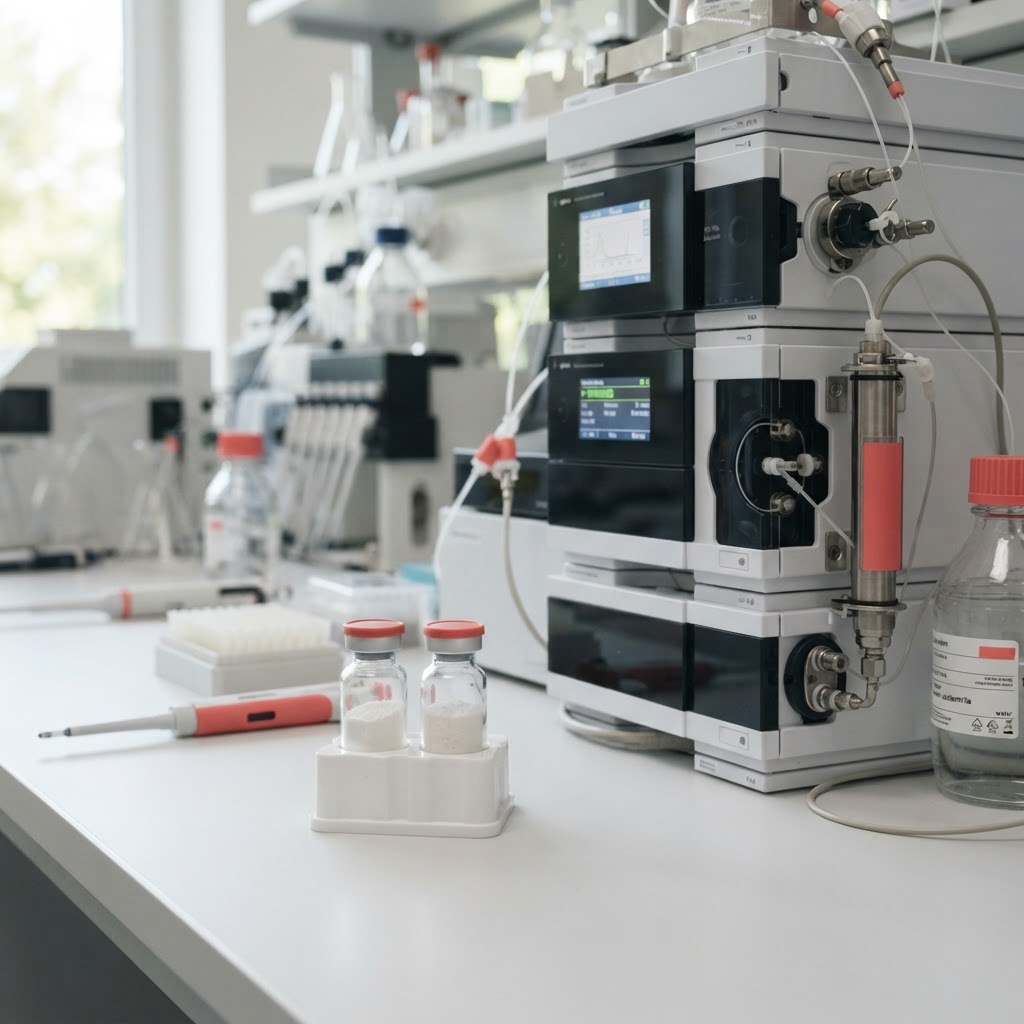
Our blend analysis uses reverse-phase HPLC to separate the two peptides by retention time, then quantifies each against reference standards.
- Identity: each peak is matched to its expected retention time.
- Purity: the area of each main peak is compared to the total peak area.
- Net content: the actual mg of each peptide is calculated and compared with the label claim.
- Optional add-ons: endotoxin and heavy-metal screening for a fuller safety picture.
Every result is issued as a certificate of analysis with a unique report number you can check on our verification page.
What a good blend COA looks like
| Check | What to look for |
|---|---|
| Both peptides listed | Separate purity and mg values for BPC-157 and TB-500 |
| Purity | Typically 98% or higher for each component |
| Fill accuracy | Within roughly ±10% of the label claim |
| Chromatogram | Two clear main peaks, minimal side peaks |
| Verifiable | A report number you can look up on the lab's site |
Red flags include a single combined purity number, no chromatogram, or a COA that cannot be verified with the issuing lab.
Where to buy quality BPC-157 + TB-500 in Canada
Sourcing matters as much as testing. Look for suppliers that publish independent, verifiable third-party COAs for each batch, ship domestically, and clearly label products for research use.
One Canadian option is Alpha Peptides Canada, which offers research peptides including the BPC-157 + TB-500 blend, with batch testing you can cross-check. Whatever supplier you choose, you can always send a vial to PRISM for independent confirmation.
Getting your blend tested
If you already have a BPC-157 + TB-500 vial, our peptide testing service will tell you exactly what is inside. See all services and pricing to start an order.